Start at the first visible sign
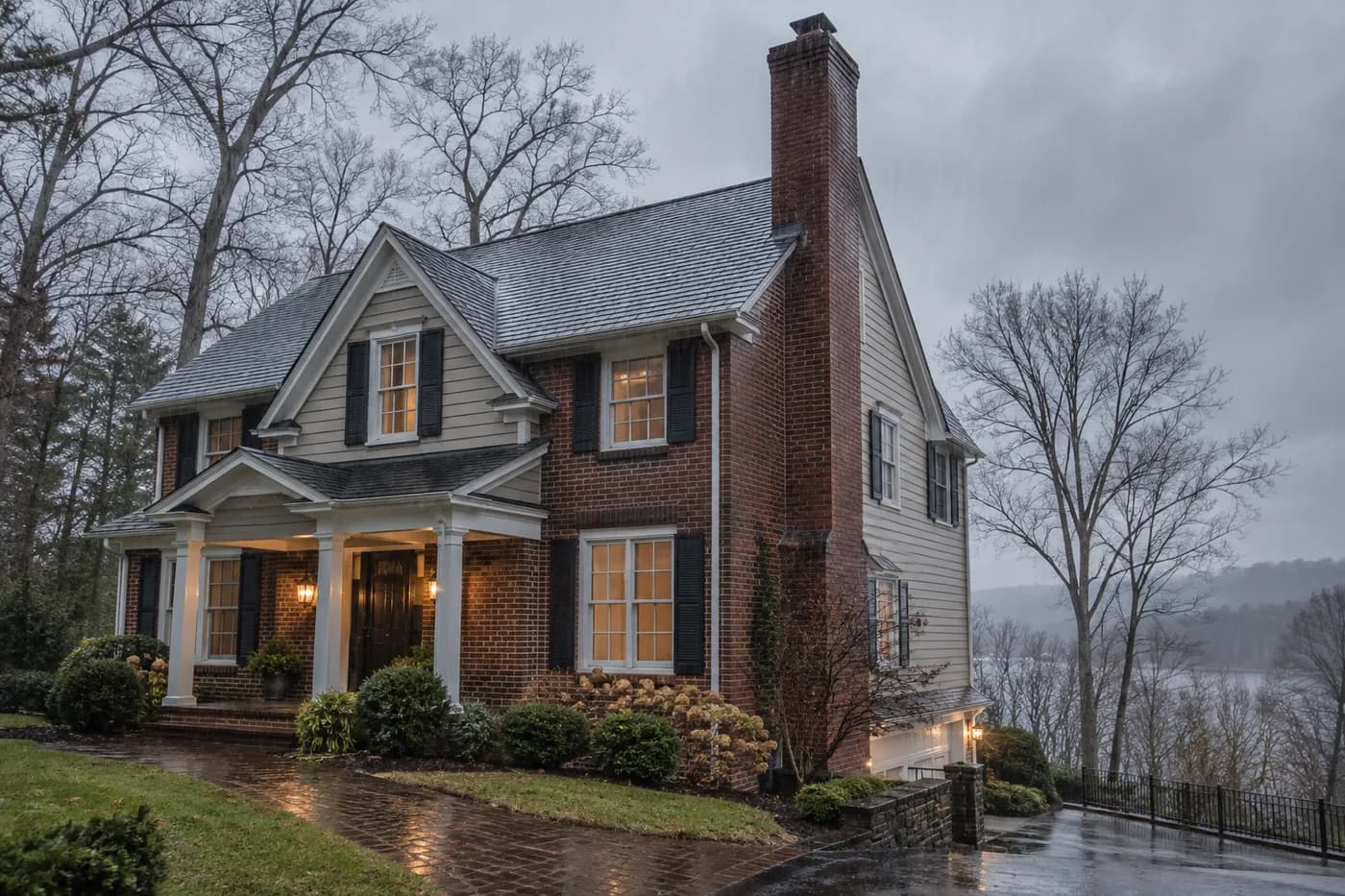
Photograph where water or staining first appears from a safe indoor or ground-level position. Note the date, rainfall and whether the appliance was operating. Do not climb onto a wet roof or use the fireplace to dry a damp area.
A stain shows where moisture became visible, not necessarily where it entered. A cap, crown, flashing detail, surrounding roof or condensation issue may call for a different investigation.
Organize the history around events
Keep a simple sequence of wet and dry observations and any previous repair. Record whether the problem changed after the work, rather than treating the repair invoice as proof the original cause was established.
Share previous product details if masonry was treated. Ask whether the proposed investigation considers multiple water paths and whether adjacent roofing needs a separate trade.
Compare the diagnostic scope before the treatment
One proposal may inspect the source while another only apply a coating. Ask what evidence identifies the likely entry point, which alternatives remain unconfirmed and how the work will be evaluated afterward.
Clarify whether the proposal covers flashing, crown work, masonry preparation or roof repair. A vague promise to waterproof the chimney can hide important differences in materials and responsibility.
Agree on a follow-up plan
Keep photos before work, the agreed scope and completion images. Ask what to monitor afterward and who to contact if moisture returns. A weather-dependent problem may require observation over time, not an immediate claim of success.
Do not assume a water repair also assesses the flue or appliance. If moisture has affected venting components, ask whether another inspection is needed before use.
Map moisture without inventing a source
Create a simple diagram of the room and mark the first visible moisture, not only the largest stain. Attach dated photographs and weather observations. If water reappears, photograph from the same positions. Consistency can help a professional compare events while keeping roof access with qualified workers.
Record every prior repair by exact area and material when known. “Sealant applied near roof junction” is more useful than “chimney fixed.” A continuing symptom after one repair may reflect an incorrect source, incomplete scope, another entry path or a separate moisture mechanism.
Write a diagnostic scope before a repair scope
A diagnostic proposal should identify the components to be examined, access limits, observations to be documented and how adjacent roofing will be handled. A repair proposal should identify the supported cause, preparation, method, materials and follow-up. Combining both in one vague line makes competing estimates difficult to interpret.
For weather-dependent issues, agree on what follow-up means before work starts. Ask who receives new photographs, what period or conditions matter, and which areas were outside the contractor’s scope. Avoid accepting a universal promise that no moisture can ever return.
Sources, authorship and context
Published 2026-09-24 by Chimney Sweep Ratings editorial. Service images are AI-generated illustrations.
Technical background: CSIA homeowner resources. Our comparison questions and worksheets are editorial guidance; an on-site professional determines the applicable scope.
About the Editorial Desk · Government and industry safety references · Editorial standards and corrections · Service scope library · Problem library
Decision pathway
Do not stop at this article
Clear answers
Questions homeowners ask
Is a new cap always the answer?
No. It addresses only some possible entry paths and must suit the venting system.
Can I tell roof leaks from condensation myself?
You can record timing and visible conditions, but a qualified assessment is needed to establish the cause.