Treat visible material as an observation
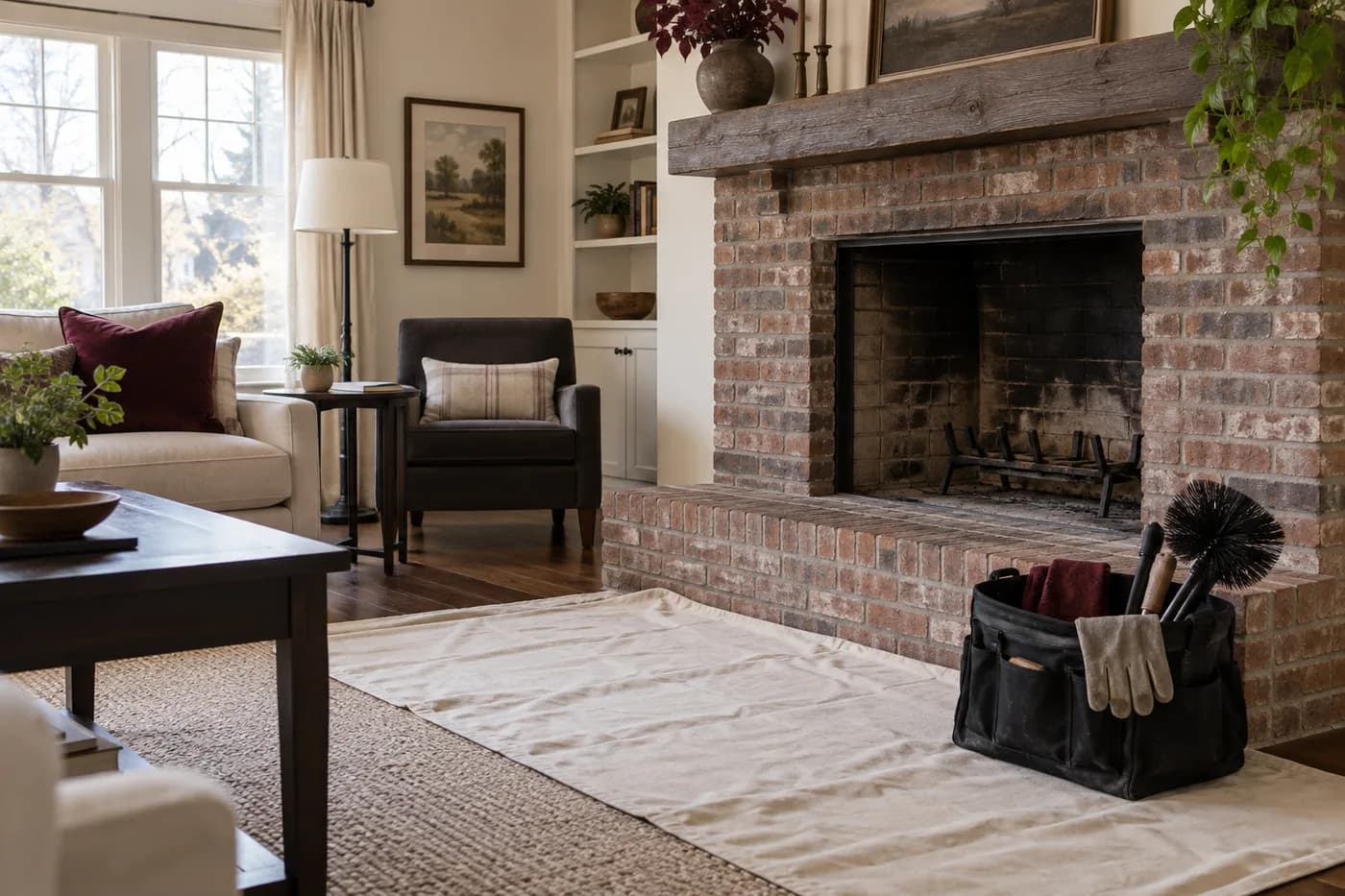
Dark material in a fireplace can raise a question, but a view from the hearth does not show the entire vent. Creosote is associated with wood combustion and is combustible. Deposits can vary in form and removal needs; a homeowner should not infer their condition from color alone.
Photograph what is already visible from a safe position. Avoid reaching into the flue or disturbing material. Share the appliance, fuel and recent operating history with a chimney professional.
Ask what ordinary sweeping can accomplish
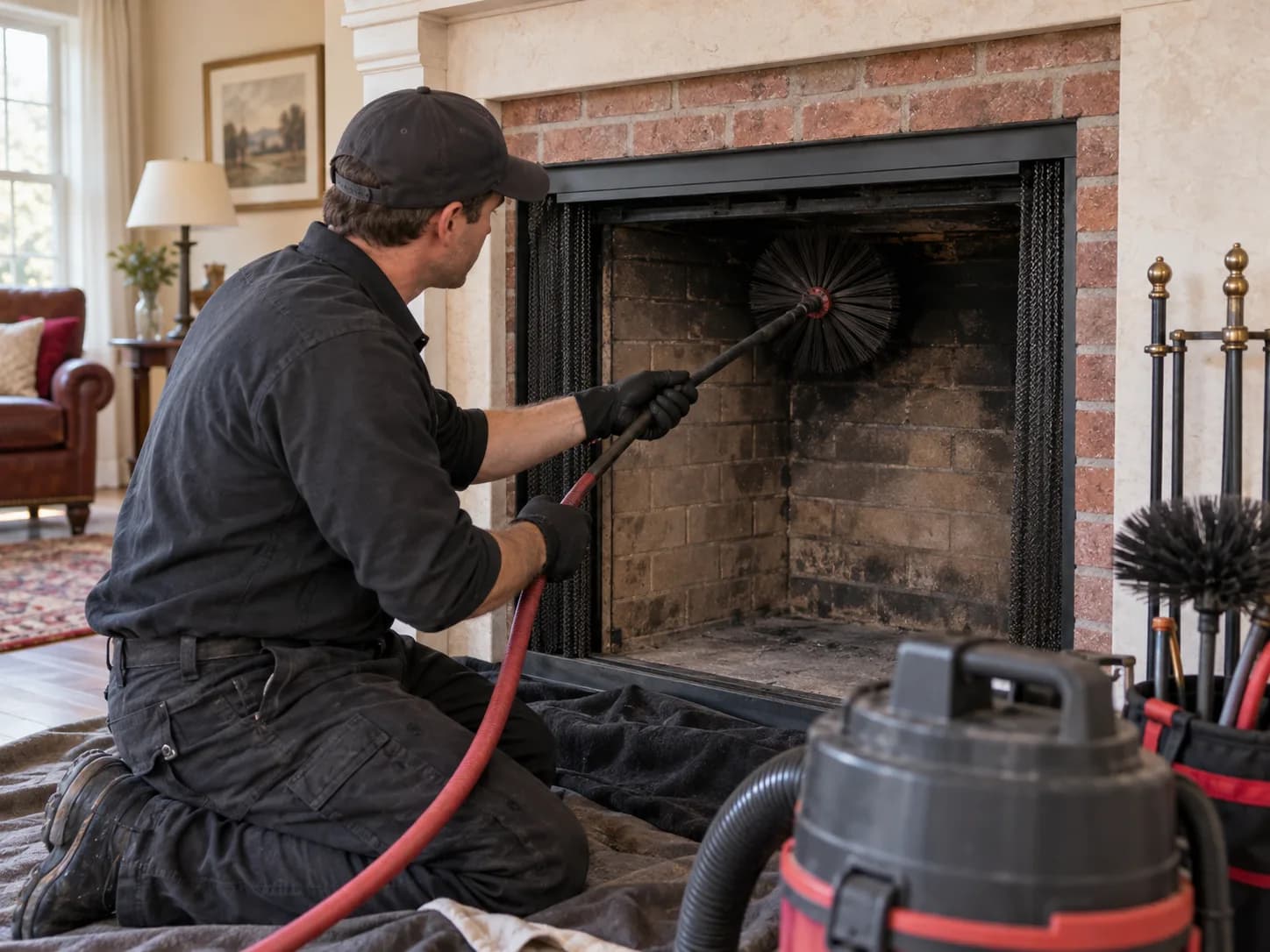
A quote for sweeping may assume deposits that the provider can remove with its normal method. Ask how the company handles material that requires a different approach, how it protects the liner and whether additional work needs separate authorization.
A product advertised for creosote treatment does not establish that a chimney is clean or fit for use. Ask what professional examination and documentation will confirm the result.
Separate deposit removal from the reason it formed
After addressing the immediate condition, discuss appliance operation, fuel and the venting system with the professional using the manufacturer instructions. Several factors may contribute, so avoid adopting a single explanation based on an advertisement.
The useful output is a plan: what was removed, what remains, which operating guidance applies and whether a further inspection or repair is needed. Ask for remaining uncertainty to be written down.
Keep comparable evidence
Before-and-after photographs are easier to interpret when they show the same component from a similar position. Ask which flue and location each image depicts. A dramatic close-up without context can be difficult to evaluate against a repair recommendation.
If you suspect a chimney fire or immediate danger, contact emergency services and do not reuse the system until it has been professionally assessed and necessary work completed. Do not attempt to burn deposits away.
Build a deposit evidence record
Record the system, fuel, operating history and last known cleaning before focusing on a dramatic close-up. Ask the professional to identify the component and location represented by each image, characterize the accessible deposit and explain whether ordinary sweeping is expected to remove it.
When before-and-after photographs are used, comparable framing matters. Keep the original files and report together. A cleaner-looking photograph can document removal at that location, but it does not by itself establish liner condition, complete passage clearance or suitability for continued use.
Compare removal proposals without guessing
Place proposals side by side by affected component, proposed method, liner-protection approach, access, confirmation method and remaining uncertainty. Ask whether the price assumes ordinary deposits and how the provider will seek authorization if conditions differ.
Do not convert a product name into a diagnosis. If a treatment or specialized removal process is proposed, ask what observed condition supports it, what the product manufacturer requires and how the professional will evaluate the result. Preserve any restriction on use exactly as written.
Sources, authorship and context
Published 2026-09-24 by Chimney Sweep Ratings editorial. Service images are AI-generated illustrations.
Technical background: CSIA homeowner resources. Our comparison questions and worksheets are editorial guidance; an on-site professional determines the applicable scope.
About the Editorial Desk · Government and industry safety references · Editorial standards and corrections · Service scope library · Problem library
Decision pathway
Do not stop at this article
Clear answers
Questions homeowners ask
Can smell tell me how much creosote is present?
No. Odor is not a reliable measure of deposit quantity or vent condition.
Does sweeping repair a damaged liner?
No. Deposit removal and liner repair are different scopes and should be explained separately.