Identify exactly what was inspected
Look for the property, date, appliance and flue identification before reading the recommendations. In a home with multiple fireplaces, a finding attached to the wrong system can lead to an incorrect comparison. Confirm the inspection level and why that scope was selected.
A report should make accessible and unexamined areas understandable. If an attic, roof section or concealed area could not be assessed, ask how that limits the conclusion and whether follow-up is required.
Separate observation, interpretation and recommendation
An observation describes what the inspector saw. An interpretation explains its significance. A recommendation proposes what to do. Ask the provider to connect all three rather than treating a photograph as a self-explanatory reason to authorize major work.
Uncertainty is useful when clearly stated. A suspected condition may require further access or assessment before a repair method can be chosen. Ask what evidence would resolve the question.
Read photographs as a sequence
Images need enough context to identify the component and location. A close-up can show detail while a wider image establishes where it belongs. Ask for labels and, where helpful, a sequence that another qualified professional can follow.
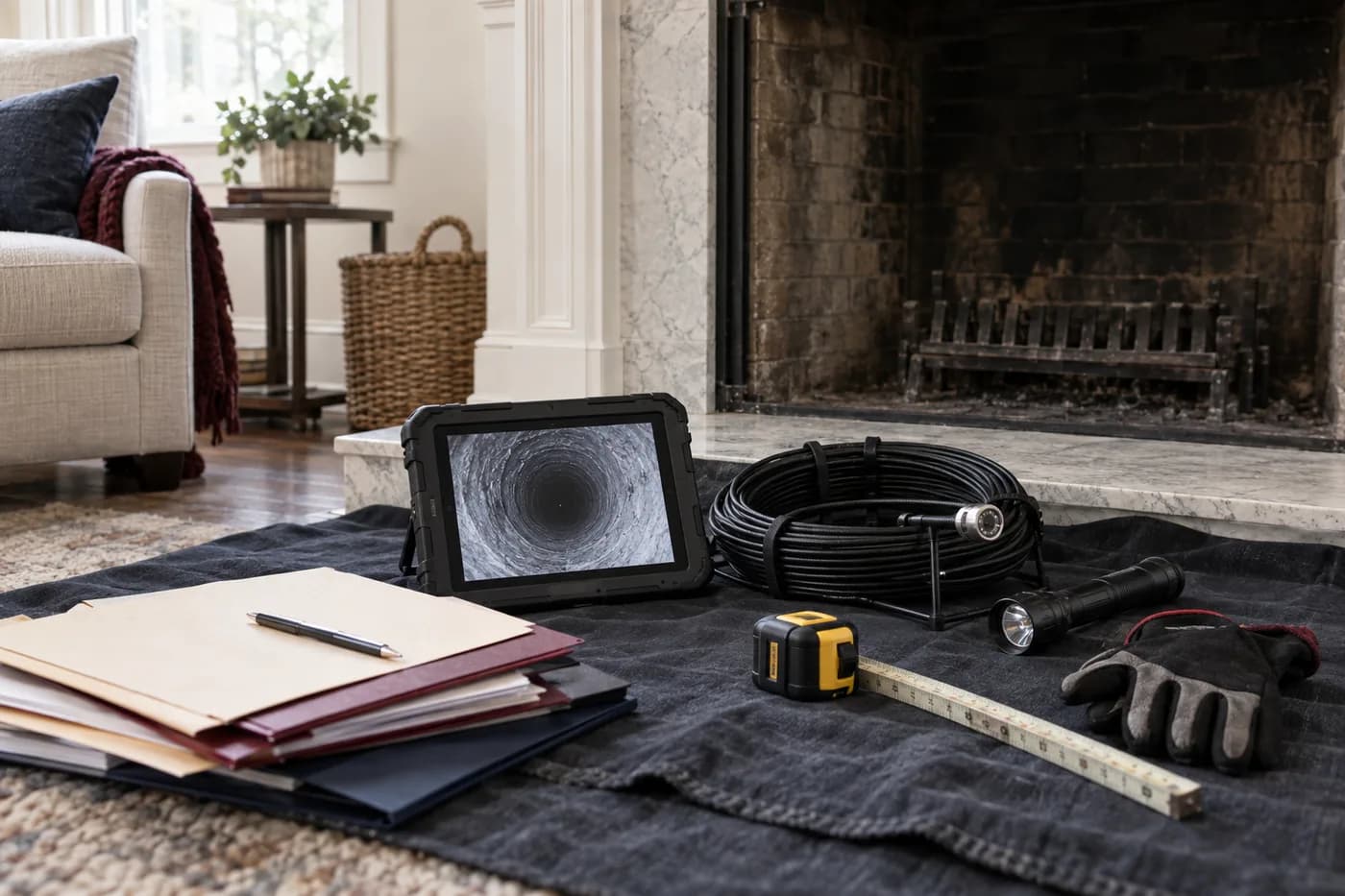
Do not use an AI-generated illustration or a generic reference image as evidence of the condition at your home. Our editorial imagery is contextual; only actual inspection documentation can describe the inspected property.
Ask for a prioritized next step
Clarify restrictions on use, unresolved questions and the order of recommended work. Do not infer that every recommendation has the same urgency or that a completed cleaning resolves all findings.
Keep the original report unchanged. Add your questions and later responses as separate notes in the Chimney Health Passport. When obtaining another opinion, share the original scope and limitations along with the estimate.
Audit the report in four passes
First verify identity: property, date, inspector, appliance and flue. Second verify scope: inspection level, reason, accessible areas and limitations. Third trace each recommendation backward to an observation and image. Fourth build the decision list: immediate restrictions, further investigation, repair options and ordinary maintenance.
Use a margin code—O for observation, I for interpretation, R for recommendation and U for unresolved. A paragraph that jumps from a photograph directly to a major repair without explaining interpretation becomes an explicit follow-up question. This is not a technical challenge to the inspector; it is a request for a traceable report.
Prepare the report for a second opinion
Share the unedited report, original images and the inspection reason. Do not send only a screenshot of the most alarming sentence. Tell the second professional which access was available and which questions remain. Otherwise the second visit may evaluate a different scope and produce an apparently contradictory answer.
Keep the second response separate rather than overwriting the first report. Your Passport timeline should preserve what each professional observed, what changed between visits and which work was completed. A later clean image cannot retroactively explain an earlier unlabeled one.
Sources, authorship and context
Published 2026-09-24 by Chimney Sweep Ratings editorial. Service images are AI-generated illustrations.
Technical background: CSIA homeowner resources. Our comparison questions and worksheets are editorial guidance; an on-site professional determines the applicable scope.
About the Editorial Desk · Government and industry safety references · Editorial standards and corrections · Service scope library · Problem library
Decision pathway
Do not stop at this article
Clear answers
Questions homeowners ask
Is a camera scan a complete report?
Not by itself. Scope, component identification, findings and limitations give images their meaning.
Should I accept a repair recommendation immediately?
Understand the evidence, any restrictions on use and the written scope. Significant or unclear proposals can merit an independent opinion.