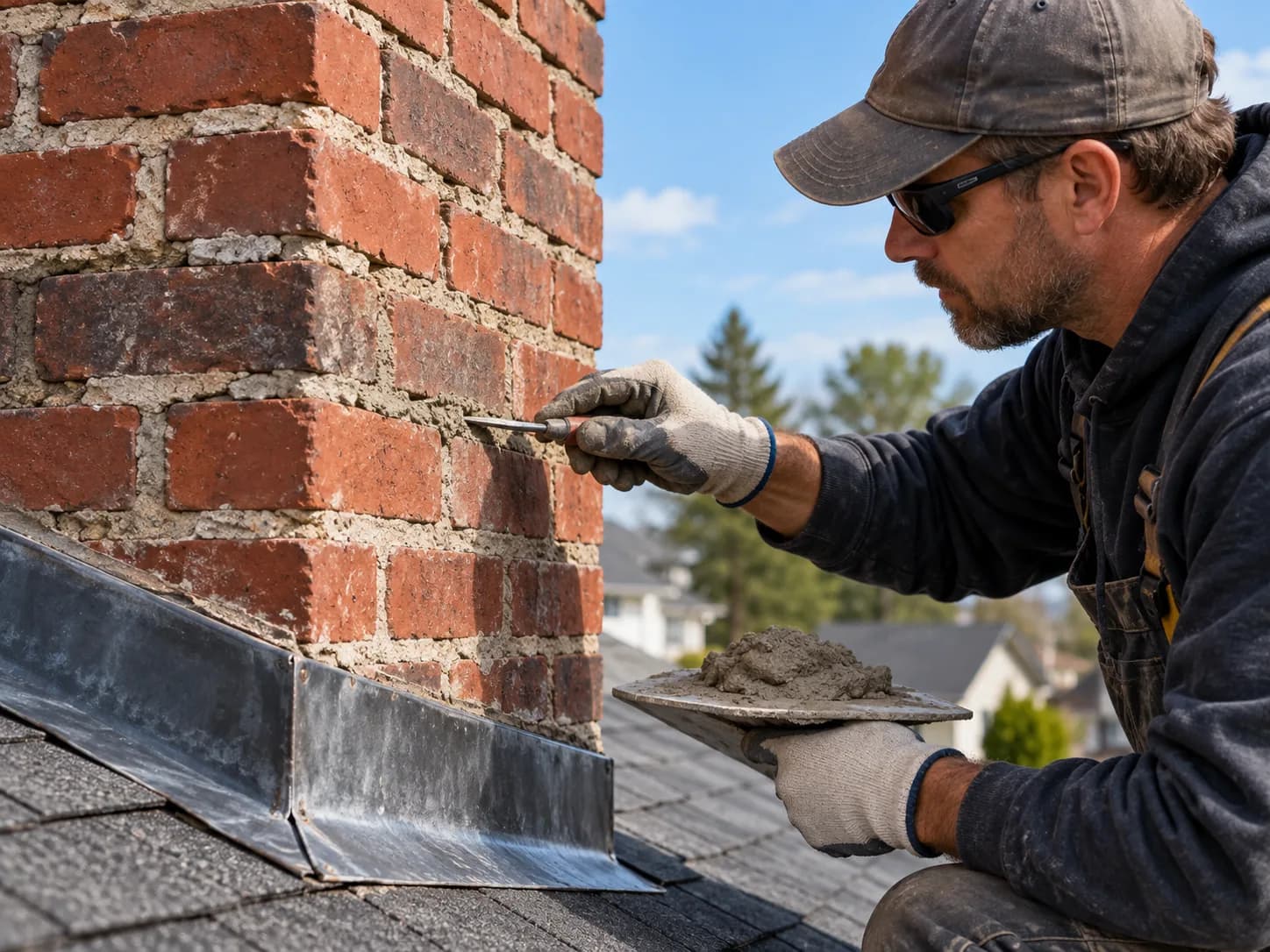
Exterior signs worth documenting
Photograph cracked crowns, missing mortar, spalled brick, staining, leaning components and damaged caps from a safe location. These signs do not provide a complete diagnosis, but they help a chimney repair contractor prepare for the visit.
- Loose, recessed or crumbling mortar joints
- Flaking brick faces or masonry fragments
- Cracks across the crown or wash
- Rust, staining or displaced flashing
- A missing, damaged or poorly fitting cap
- Visible movement or leaning
Interior symptoms can point to several causes
Water near a fireplace can enter through the crown, cap, flashing, masonry or an unrelated roof defect. Smoke spillage can involve blockage, appliance setup, air pressure, flue sizing or other conditions. Avoid accepting a confident repair diagnosis without evidence.
Ask for repair-specific details
A written proposal should identify the observed defect, repair method, materials, preparation, access, cleanup and warranty. For substantial work, ask how the proposed repair addresses the cause rather than only the visible symptom.
Crown, cap and flashing are different components
A cap sits at a termination; a masonry crown sheds water at the top of the chimney; flashing connects the chimney and roof. The names are sometimes used loosely in conversations, so ask the contractor to label the actual component on a photo.
This matters because replacing one component may leave another defect untouched. A leak proposal should explain which entry path was identified and which possible sources remain unconfirmed. Ask how the company will assess the repair if moisture returns.
Repair materials and preparation deserve their own line
Masonry work is difficult to compare when estimates say only “repair chimney.” Ask for the affected area, preparation, material compatibility and finishing method. Older masonry may require care to avoid a repair material that behaves differently from the surrounding construction.
For a liner or termination system, keep the product identification and installation documentation. A visually tidy repair does not establish appliance compatibility. Ask what completion check demonstrates that the agreed work has been finished.
Maintain a condition timeline
Photograph the same visible area from a safe location over time. Record dates of leaks, storms, service visits and any change in appliance operation. Avoid interpreting every stain or crack yourself; the timeline is evidence for the professional.
After repair, save the scope, agreed changes, materials, images and warranty. If a later contractor proposes additional work, that record helps explain what was already addressed and which parts of the system remain outside the prior scope.
Sources, authorship and context
Published 2026-09-24 by Chimney Sweep Ratings editorial. Service images are AI-generated illustrations.
Technical background: CSIA homeowner resources. Our comparison questions and worksheets are editorial guidance; an on-site professional determines the applicable scope.
About the Editorial Desk · Government and industry safety references · Editorial standards and corrections · Service scope library · Problem library
Clear answers
Questions homeowners ask
Can cracked chimney mortar be ignored?
Deteriorated joints can admit water and worsen, but severity varies. A qualified professional should assess the affected area and underlying cause.
Does a chimney leak always require masonry repair?
No. Caps, crowns, flashing, roof details and condensation can all be involved. Diagnosis should come before the repair method.
What should be in a chimney repair warranty?
Look for the covered work, exclusions, duration, transfer terms and the process for reporting a concern, all in writing.